









What does a beginning mean, if the end is already written?
We live our lives in a linear fashion within the set boundaries of our words. They shape what we can see, what we can imagine, and how we live. Human language and our understanding of the universe are built on sequence: first, then, after. Every sentence: a determined end. So, logically, we perceive time the same way we perceive every tangible idea the human mind has held. A line moving forward. A life beginning, swelling, then inevitably ending.
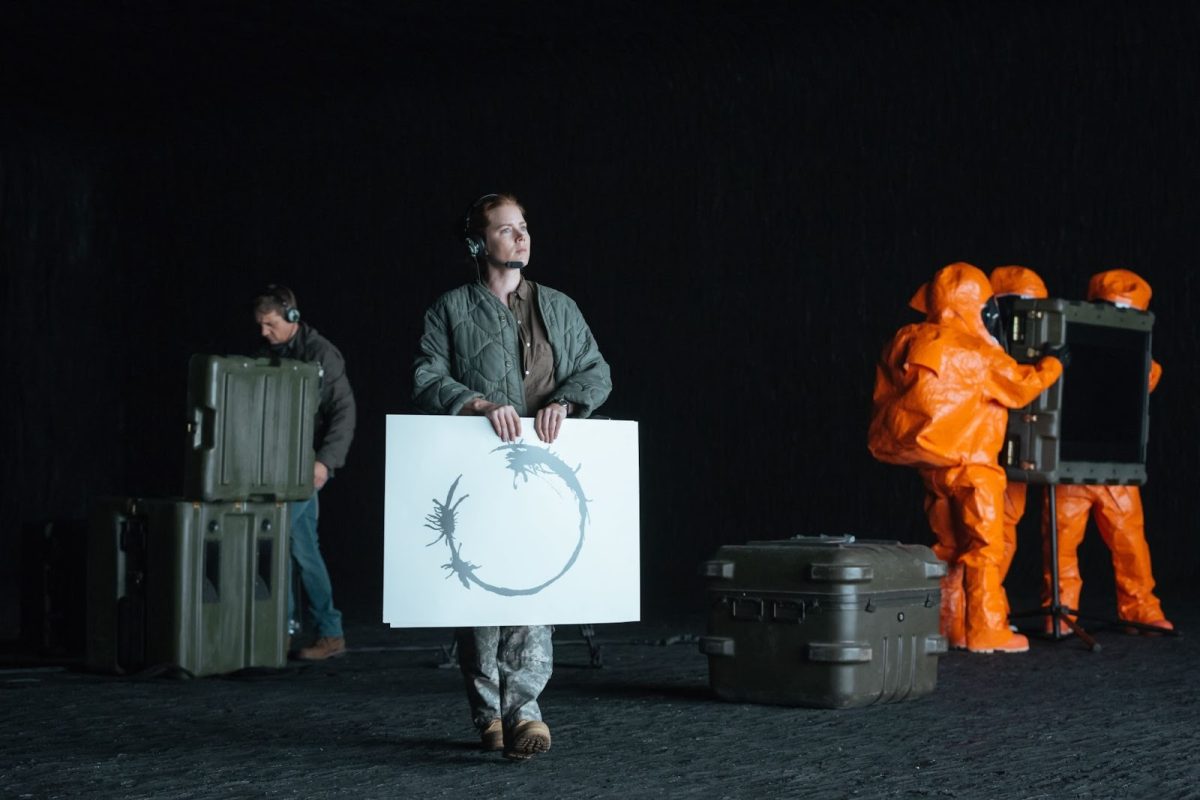
The heptapods of Arrival possess a language without before or after, without the strict, inefficient guidelines of our linear speech and thought. A language drawn in circles.
Arrival gives us this vision. We think we are watching the past. There’s a child, one filled with joy, full of life and wonder, though we are brought back down. There’s a sickness; then a silence. This is not the past but the future. We understand later that “past” and “future” were never separate at all. The film begins with death and ends with birth, but the order is only ours, not the story’s.
This is where the burden of freedom appears. If you could see every moment of your life, if you knew the grief and the joy together, would you still say yes, would you move forward, push to the next day, even though your fate is determined? Louise does.
She chooses her daughter, though she knows the loss. Freedom isn’t breaking the circle. Freedom is expecting it. As philosopher Friedrich Nietzsche put it: “amor fati”; to love your fate, not despite its suffering but because of it, because every part is inseparable from the whole. In Arrival, this is Louise’s answer. She chooses not to break the circle but to embrace it; the pain belongs to the same whole as the love.
Cinema, too, is language. Every frame already exists before the light projects across the screen. Yet we sit in the dark, enamored, believing something is unfolding. The first time we watch Arrival, we watch as we were conditioned to. Step by step. Only forward. The second, you try to experience it as the Heptapods would. Past, present, future as one. The rewatch is a foreign experience for our psyche. Not Linear, no, the whole, every image touching every other.
Louise whispers, “Despite knowing the journey and where it leads, I embrace it.” She has seen the circle, and still she says yes.
And so we return. To where we began. To the question that is not a question, because the answer was already written.
What does a beginning mean, if the end is already written?