



























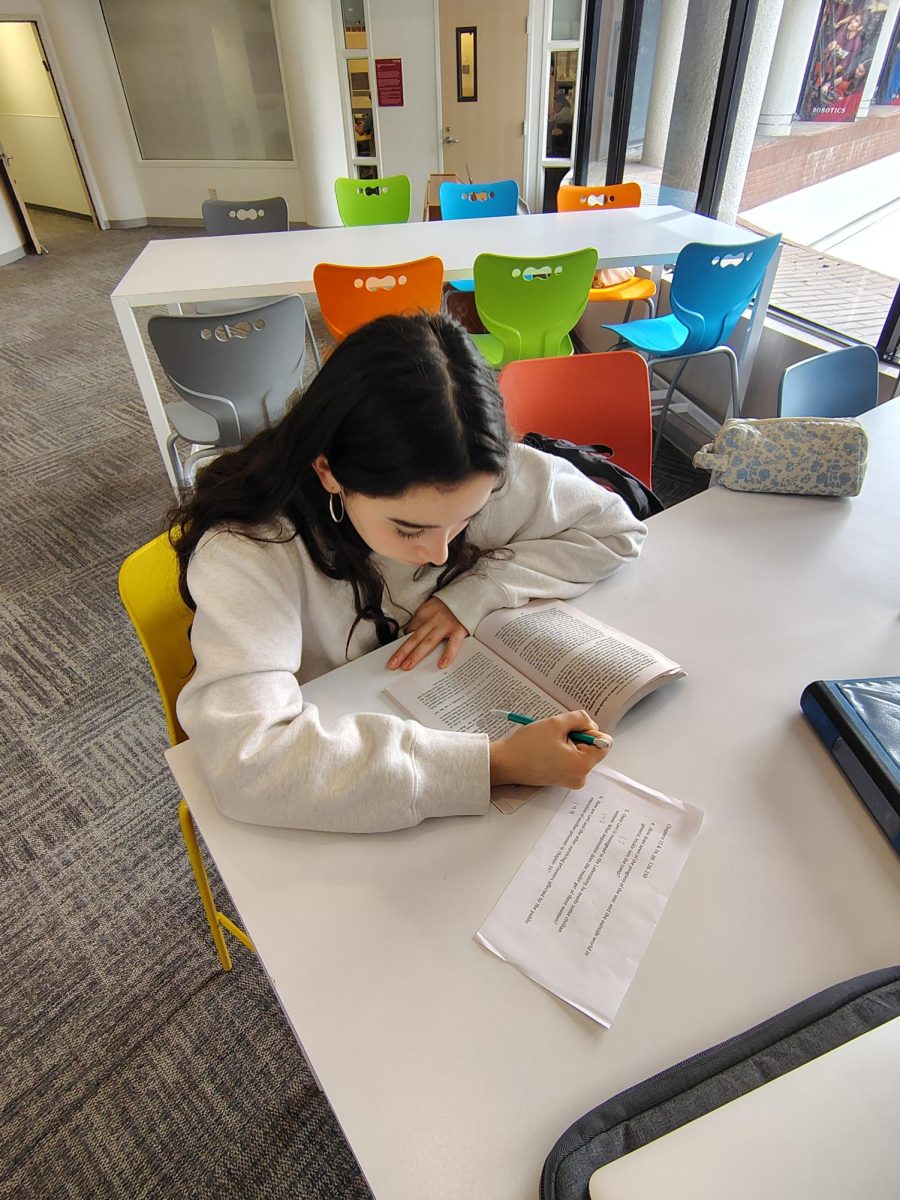
Homework is a primary source of stress for 99% of students (Stanford Study). On average, high school students are assigned 3.5 hours of homework per weeknight, which equates to more than 17 hours a week. There isn’t consensus around teachers assigning homework; many assign hours of homework, while others assign none.
Homework can be a useful tool to aid and support the work done in class; however, when it’s assigned as busy work, it’s proven to be less effective. While homework should still exist, since it supports in-class learning, it should be intentionally assigned with clear guidelines in mind: supportive, concise, and helpful.
A student’s grade level significantly impacts the amount of work assigned to be completed at home; its effectiveness also changes. Typically, homework’s effectiveness exponentially increases as a child gets older. According to the 2017 meta-analysis that Edutopia referenced, homework in grades 1-4 impacts academic achievement by only 21% compared to the 95% for grades 5-8. Even more than that is the 129% increase for high school students, grades 9-12.
Researchers concluded that as students become older and mature, their ability to “prepare more elegant and qualified homework” also develops. Older students can complete homework more independently than younger kids; therefore, it shows a student’s knowledge in comparison to a parent influencing their child’s work.
Teachers each take different approaches to homework, and many have their own set of guidelines and beliefs for assigning it. Mr. Scheindlin, who teaches 9th grade CP history and 10th Honors history, has varying answers for each level of class. He said he assigns homework with two goals in mind: “homework should be an extension or different angle of looking at something learned in class, or the reverse – reading the basic fundamental events so in class can be a deeper conversation.”
When limited and intentional, homework can help reinforce the subjects learned in class, and it can also be a great supplement. To add, a Stanford study concluded that “too much homework can diminish its effectiveness and even be counterproductive.”
Most students feel that while homework may be helpful, it’s not worth the time and stress it causes. Jonah M. (‘28), a student in all college prep level classes, said, “I think students should have zero homework per night because we do 6 hours of learning at school and shouldn’t be expected to do sports, and then go home to sit down and do homework.”

Another modern day factor that is impacting homework is the addition of artificial intelligence programs. Mrs. Baranovsky, an English teacher who teaches both College Prep classes and Advanced Placement (AP), limits what work she can assign outside of class because of the use of help from sources like tutors and AI. She says, “work that has to be graded for quality needs to be monitored because of the reliance on tutors and AI.”
As time goes on and AI advances, teachers are more concerned with making sure work truly demonstrates a student’s knowledge and ability. Some teachers limit the homework they assign because they don’t know how it’s being completed. Mrs. Baranovsky likes to assign mini-essays for homework about personal experiences. She said, “they are a low-stakes opportunity to practice skills regularly.”
Repetition is important for memory, which is a main reason for homework. New York University quoted one of their campus researchers, Nikolay V. Kukushkin, saying, “Repetition is a well-documented trigger for memory formation—the more times something is repeated, the better it is remembered.”
Homework is, and forever will be, a strongly debated topic as it has many academic benefits but also significant drawbacks. It takes away extracurricular time from students and can be a time waster, but it can also help students retain information and support activities done in class. Teachers should assign it intentionally, and ensure that it supports the in-class learning.
