










On the morning of January 7th, 2025 – 13 months ago – high winds raged through Los Angeles, and traffic stood still. Winds were high and traffic was congested, and there was a palpable feeling of impending disaster.
At de Toledo High School, located in West Hills, Nomi M. (‘27) sat in class, feeling off. It wasn’t just a headache or a passing wave of nausea, but something felt truly wrong. She picked up her phone and texted her mom, asking if she could come home early.
“Normally she says no,” Nomi recalled. “But, unusually, she replied yes, and that’s when I knew that something was wrong.”
When she left campus and drove through the San Fernando Valley, the uneasy feeling became tangible: in the distance, a thick pillar of smoke spiraled into the sky. “Minor fires pop up in the Los Angeles area all the time,” she said. “I didn’t understand how bad it was yet.”
When she got home and walked through her front door, her house felt tense, as the television blared at full volume, projecting the news. Her family gathered around it, listening intently, eyes locked on the screen. As Nomi asked what was happening, her mom explained that a wildfire had erupted in Pacific Palisades in the exact location where her sister Noa lived.
“Noa was at work in Calabasas when the fire began,” Nomi explained. “She couldn’t get home in time to collect any of her things. I started setting aside some of my clothes and belongings to give to her. I didn’t know what else to do.” Hours passed before Noa finally arrived at their house in Agoura. “She came home later at night, sobbing hysterically,” Nomi remembered.
Not long after, the power went out in Nomi’s home, so the family packed up and relocated to their grandparents’ house in Tarzana. “An hour after we got there,” Nomi said, “the news reporters revealed that the fire had consumed the entire Palisades neighborhood.” Her sister’s house was gone. “Nothing was salvaged,” she recounted.
Nomi’s story is not the only one; more than 13,000 homes were destroyed in Los Angeles area fires last year, displacing thousands of families. Malibu Fire Department Captain Collins described the fires as especially destructive due to the locations where they began and the extreme winds that fueled their spread. He continued, “This fire in particular was extremely challenging because of the limited resources available compared to what was needed to fight it.”
Captain Collins also suggested ways for citizens to be prepared, “We have been talking to the public about home hardening, which is one of the ways that home owners can prepare their homes to withstand the fires.”
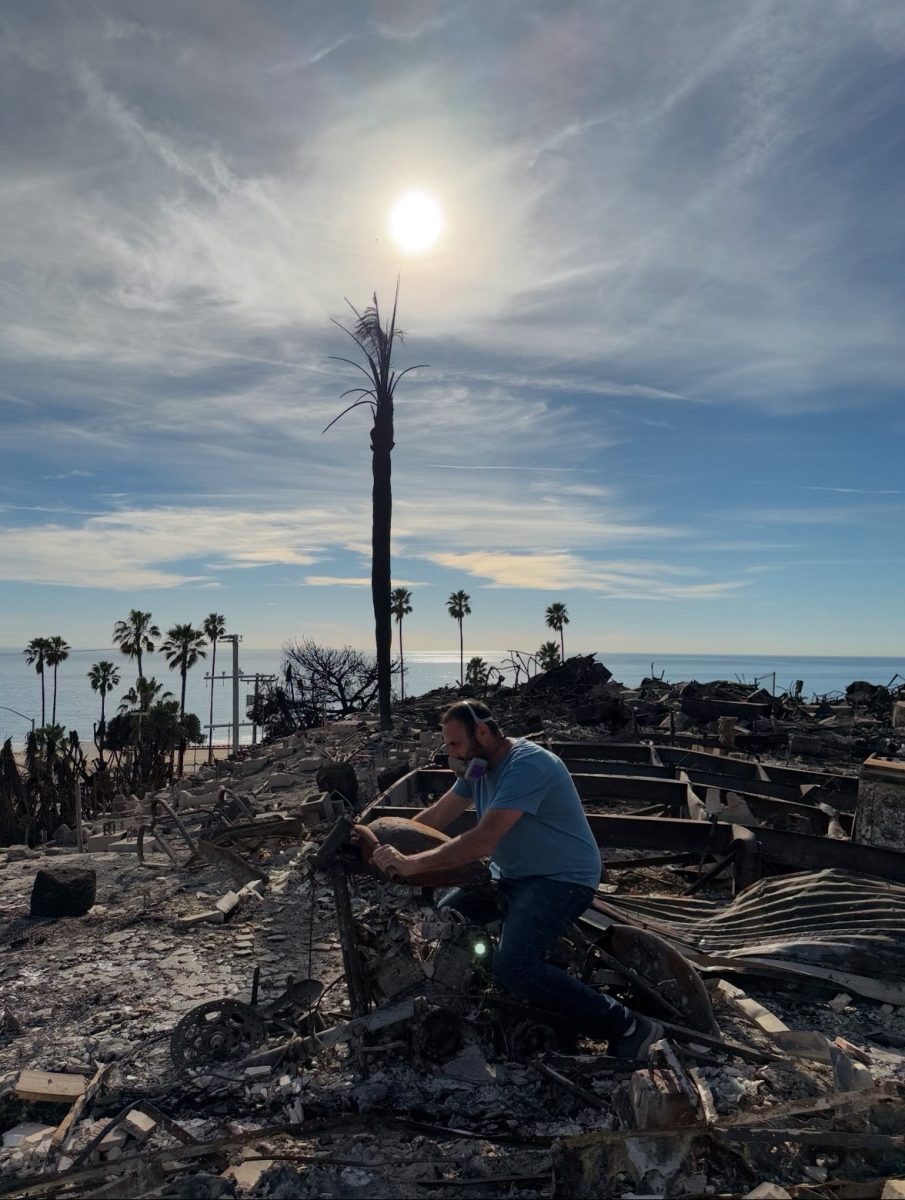
Although the fires occurred about 13 months ago, the Los Angeles community is far from recovered. According to research done by Enterprise Community Partners, burn scars still stretch through the Pacific Palisades and Altadena. While some survivors have begun rebuilding, many remain displaced, entangled in red tape, and waiting for insurance payments.
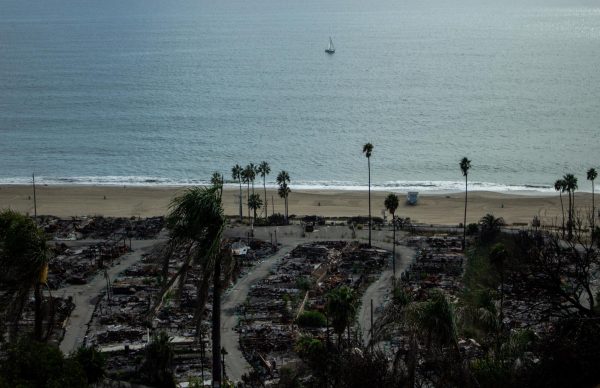
For many families, recovery has proven to be a long and frustrating process. Beyond rebuilding physical structures, survivors are navigating emotional trauma, financial strain, and the challenge of reestablishing a sense of normalcy.
While physical neighborhoods were destroyed, Los Angeles communities grew stronger. People united in the face of devastation, offering shelter, clothing, meals, and emotional support to those who had lost everything. Local organizations, schools, and faith centers became hubs for donations and relief efforts, while neighbors opened their homes to families who had nowhere else to go.
In moments of crisis, community often becomes the strongest form of resilience. Nomi recounted how the student came together to help her, “The community especially helped my sister by replacing some of her lost belongings, including clothes and hygiene items. Then, on the anniversary of the fire, she felt especially supported as the Palisades community came together in their old neighborhood for the first time since the disaster in remembrance and protest.”
Not only did neighbors come together to support one another, but schools across Los Angeles also played a crucial role in fostering unity during the aftermath. Teachers extended deadlines, counselors provided emotional support, and classmates stepped up to help peers who were displaced.
This collective response extended beyond neighborhoods and into institutions that serve as anchors for young people. Schools, in particular, became spaces not only for learning, but for healing.
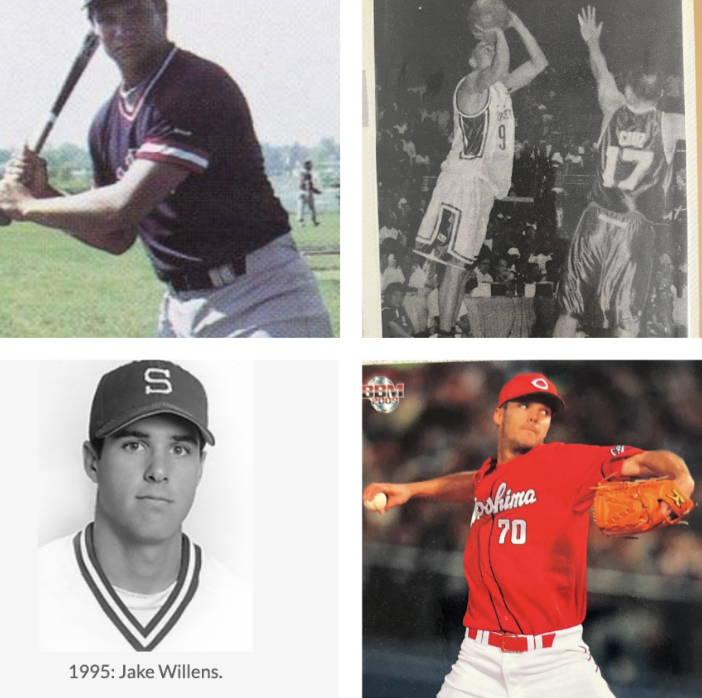
When speaking with Mr. Shpall, Head of School at de Toledo High School, he recounted moments when the school stepped in to support families affected by the fires. One instance involved an alumnus who lost all of his belongings, both practical and deeply sentimental, when his home was destroyed. While insurance and relief organizations could help replace material necessities, the loss of irreplaceable memories from his high school years felt especially devastating.
This is where Mr. Shpall, the de Toledo Athletics Department, and the community stepped in. They reprinted the alumnus’s senior night jersey and poster and provided him with an extra copy of his senior year textbook, helping restore pieces of his past that could not be replaced through traditional aid. These gestures carried profound meaning, reminding him that his community would endure and continue to support him long after the fire.
Though the flames destroyed homes, possessions, and neighborhoods, they did not erase the sense of connection that defines Los Angeles communities. From families like Nomi’s to first responders, schools, and local organizations, the response to the fires revealed a city bound together by compassion and resilience.
While rebuilding continues and recovery remains uneven, the support shown in the aftermath serves as a reminder that even in moments of immense loss, community can provide strength, continuity, and hope for the future.

Noah Scheindlin • Mar 6, 2026 at 10:33 am
this is so nice shelby great work