













Over summer break, my family and I traveled to Rome. In just three short days, we hurried through cobblestone streets to see ancient ruins and towering monuments, gaining a deeper understanding of Italian history and appreciation of their rich culture. One of the most striking historical landmarks that I saw was the Colosseum, a testament to the sophistication of ancient Roman engineering and to the central role that public entertainment and power played in Roman culture.
As we drove up to the entry of the ancient stadium, we were met by our tour guide. With an overflowing passion and a strong Italian accent, she excitedly explained, “This is an incredibly important part of Roma!”
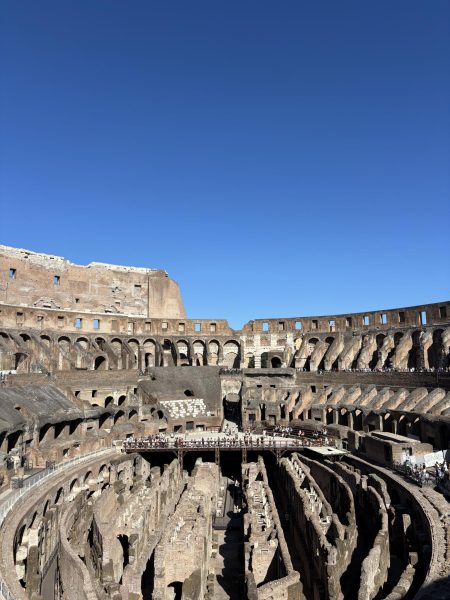
Then suddenly her enthusiastic smile turned apologetic. She paused, and began to assure us not to be alarmed by the guards carrying guns. She explained that the armed security was a recent addition to the ancient arena, meant to deter crime and terrorism.
I instinctively scanned the area, trying to locate the “intense security” she seemed to be describing. To my surprise, I counted five guards scattered loosely near the entrance. They stood casually, almost blending into the background of tourists and gelato stands.
I glanced over at my mom, who was surveying the scene as well. When she looked back at me, we shared the same expression… confusion as to how this mere handful of guards would protect the Colosseum against violent crime.
My tour guide’s face began to develop its own expression of confusion, wondering why my siblings and I weren’t afraid of the Italian Military Forces.
My mom began explaining to our tour guide that my siblings and I see more armed security on a daily basis walking into our Jewish day schools than there were stationed outside one of the oldest and most iconic structures in the world.
However, the more that I’ve thought about that statement, the less reassuring that is to me. That unsettling feeling has lingered with me long after we left the Colosseum.
That feeling has recently become much harder to ignore after a recent attack in West Bloomfield Township, Michigan, where a man drove a vehicle into Temple Israel, a conservative synagogue, that not only is a place of prayer, but is also a childcare center and preschool. The building caught fire, and authorities later found a large amount of explosives planted inside the vehicle. A security guard was injured but survived, and dozens of responding officers were hospitalized for smoke inhalation. The suspect died at the scene after security defended the synagogue and community by openly firing.
This antisemetic attack was not a distant tragedy or an abstract fear, but rather a direct attack on a Jewish space filled with the same kinds of classrooms, families, and routines that define my own community.
In Rome, the presence of guards felt like a precaution. For Jewish institutions, however, security is not a passing measure; it is a constant reality. Armed guards, locked doors, and surveillance cameras are not surprising or noteworthy, but rather they are expected and have become increasingly necessary. According to the Anti-Defamation League (ADL), antisemitism has increased 893% between years 2015-2024. It is now 2026, and anti-semitism continues to weigh on Jewish communities worldwide.
While historic landmarks are protected because of what they represent about the past, Jewish institutions are protected because of the threats they face in the present. The contrast is unsettling. It reveals a world in which an ancient significant historical structure can stand relatively unguarded, while living, breathing communities must exist behind layers of defense simply to practice their beliefs.
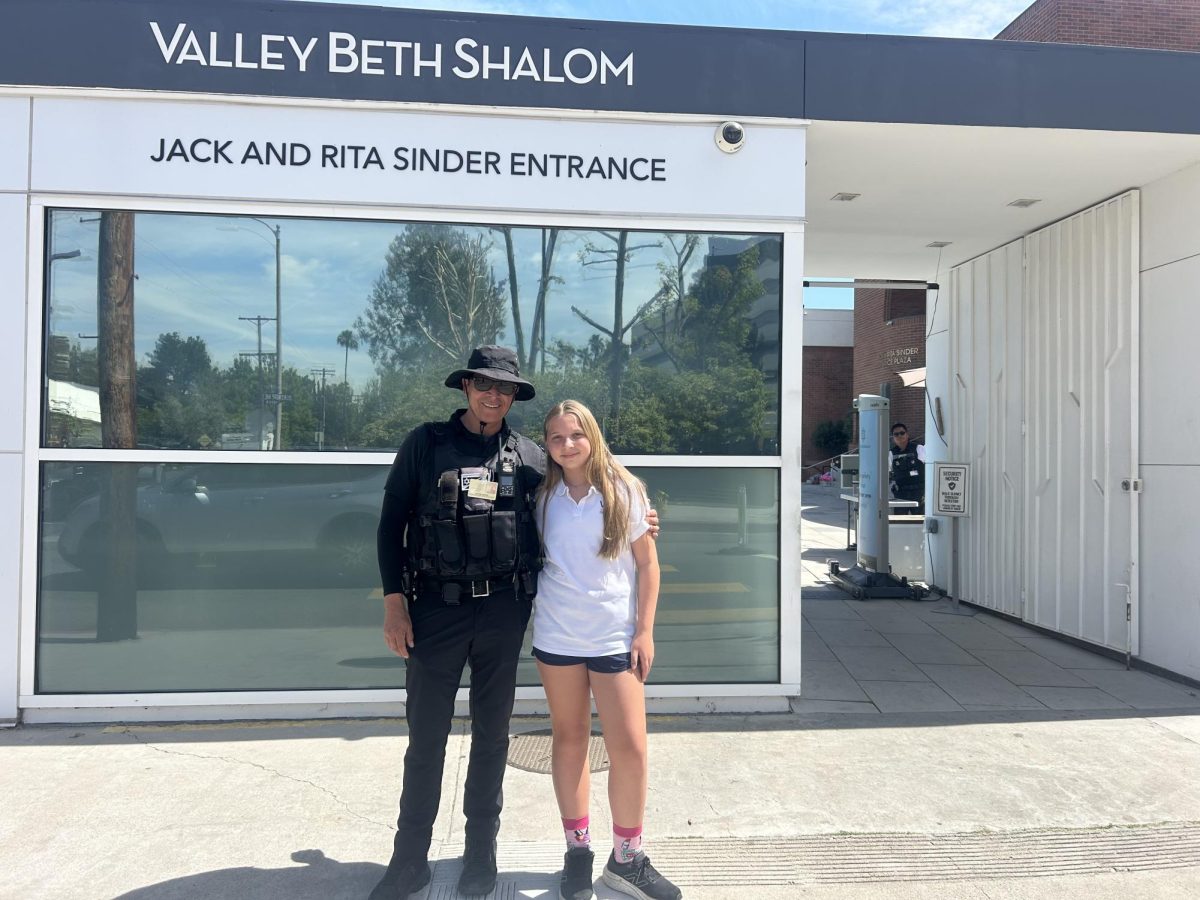
Matt Weintraub, the executive director at Valley Beth Shalom (VBS), a synagogue and Jewish day school in Encino, California addressed the current state of the world that warrants this level of security: “The rising level of antisemitism is a daunting challenge for institutional Jewish life. What is true around the world is unfortunately true in Los Angeles as well.”
In September of 2025, VBS was a target of antisemitism when a swastika was spray-painted on the sidewalk in front of the synagogue. While VBS was specifically sought out as the destination to display this message of hate, the community would not allow the hate to affect their spirit inside the doors. In an email to his community after the incident, Senior Rabbi Nolan Lebovitz stated, “While we can all feel hurt and angry, disappointed and violated, at the same time, we ought to remain steadfast in our commitment to VBS thriving as a center for Jewish life in the valley.”
In an additional message about the safety of the community, Weintraub contributed, “The Los Angeles Jewish community is blessed with resources within our community and communal visionary leaders who prioritize the safety and security of our Jewish community. While it feels unfair to drive down Ventura and see other houses of worship without security and see other schools without security, this added responsibility is part of what it means to be a Jew in 2026.”
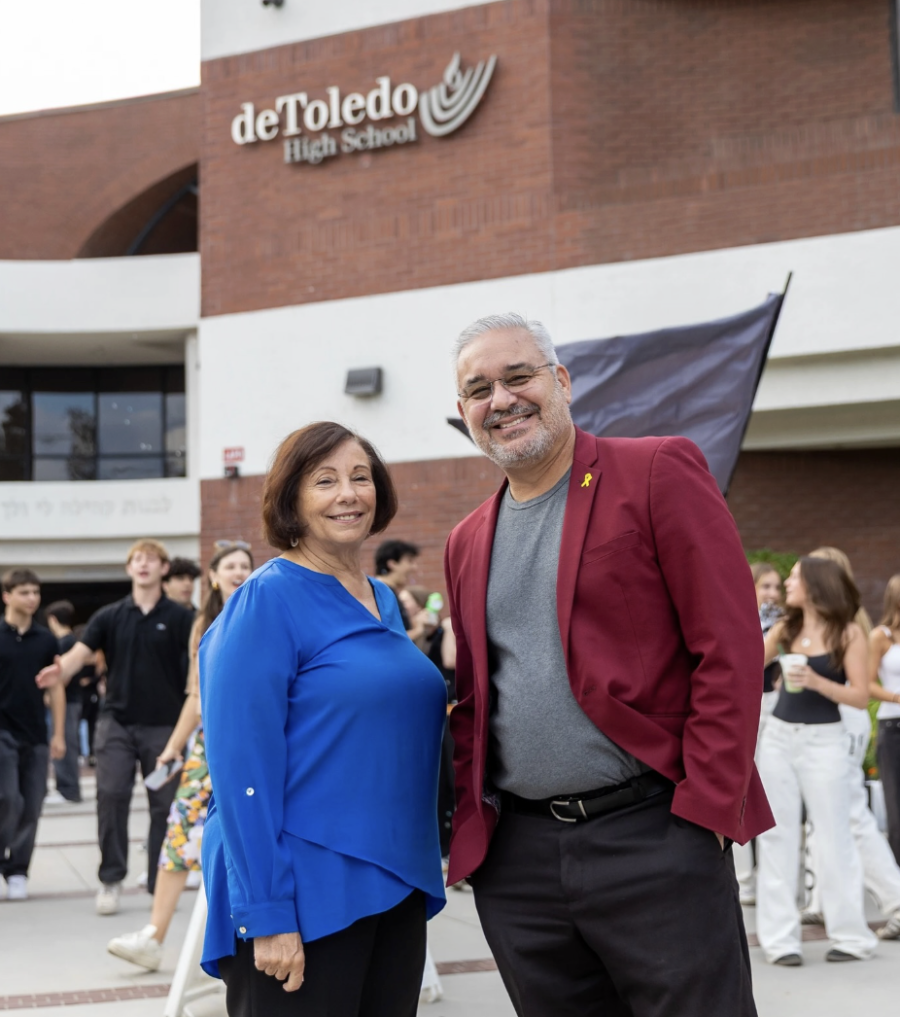
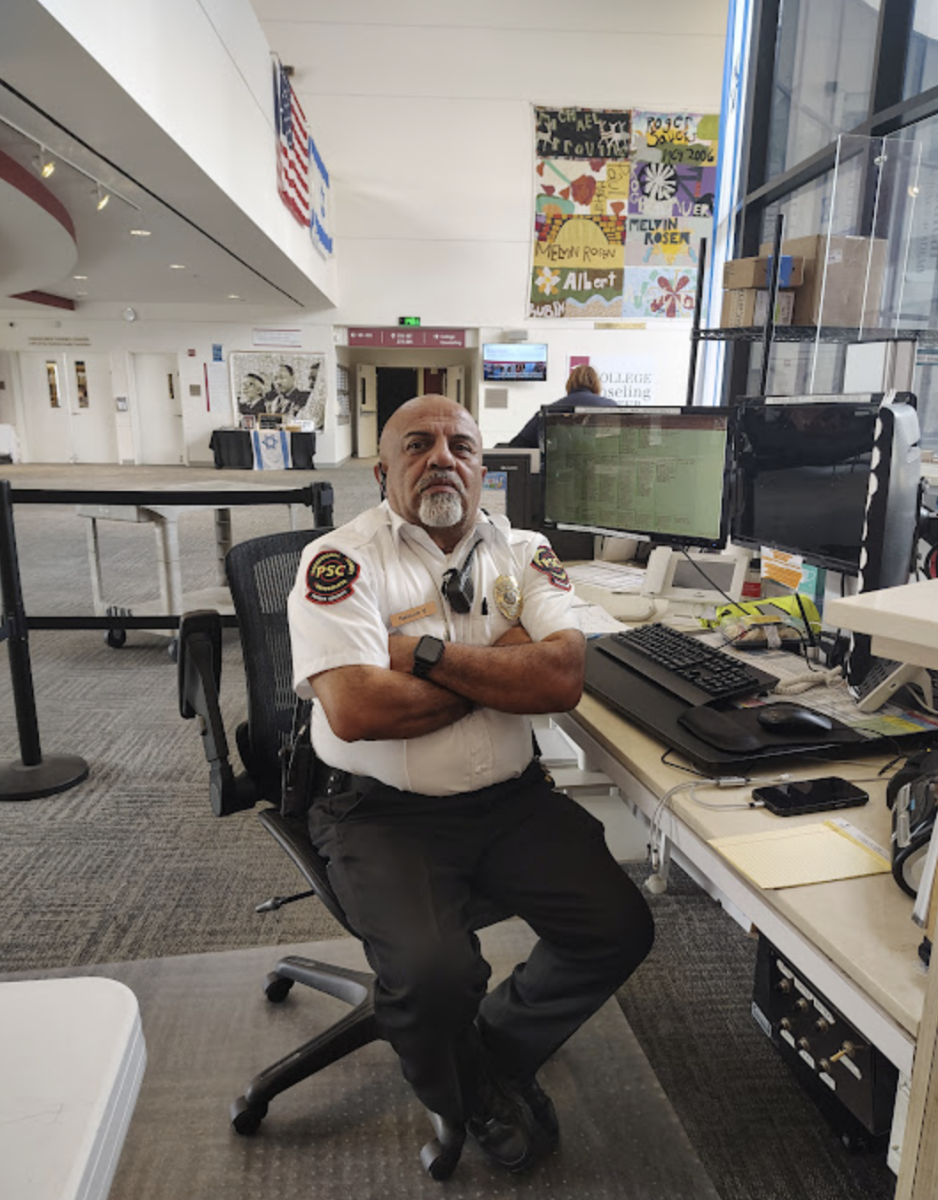
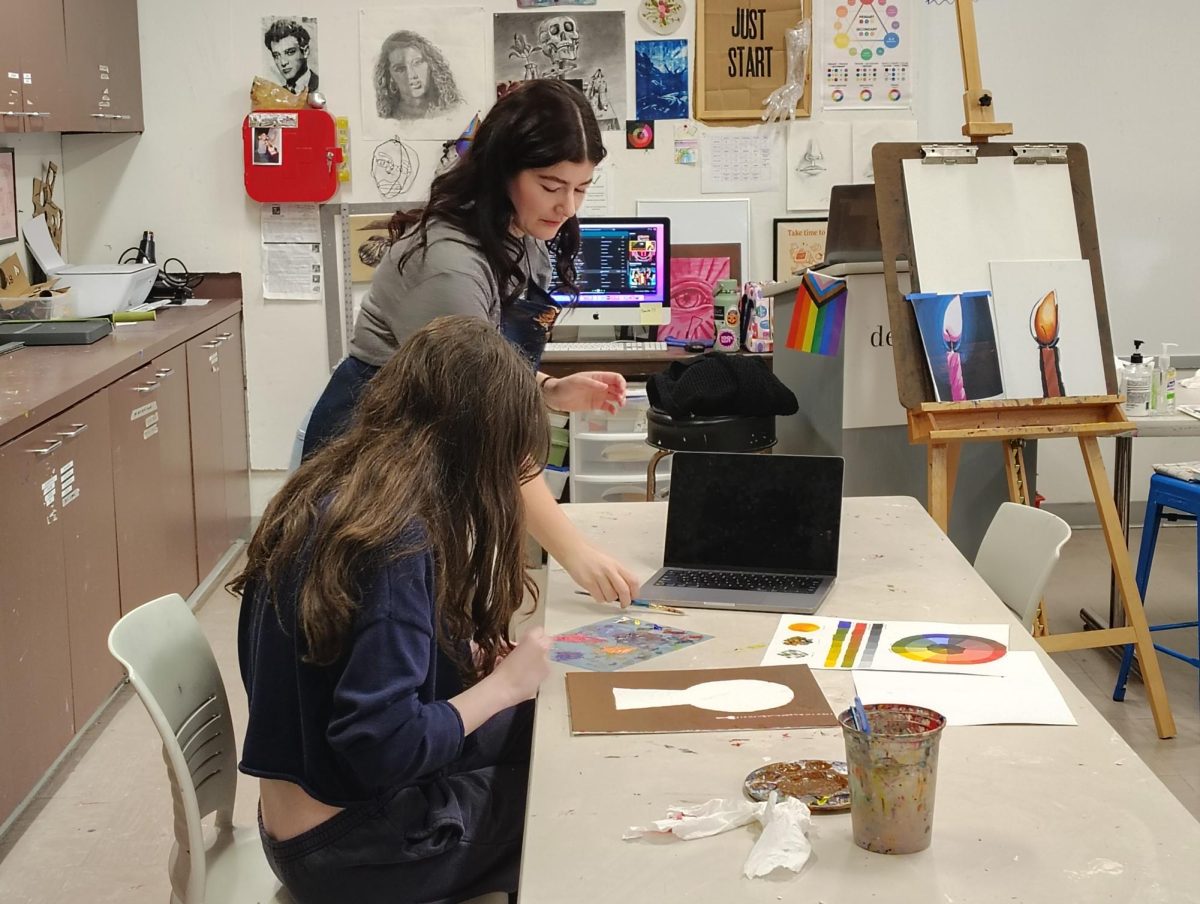
At de Toledo, a Jewish community High School in West Hills, CA, there are 10 security guards – double the amount I saw at the Colosseum. When speaking with Alejandro Z., a security guard at de Toledo, he explained the balance between being protective while still fostering a warm environment, “we try to stay vigilant and be hyper-aware of all of the surroundings and who is coming in, without standing out too much.”
Every morning, the guards are the first people that students and parents see when driving into the school and the last people they see when exiting the parking lot. They greet people entering the school with a warm smile, and despite the weight of their responsibility, they have become a familiar and comforting presence. Their job is not only to protect, but to make sure that students, teachers, and families feel safe enough to focus on learning, praying, and simply being kids.
For students at Jewish schools, armed guards, security gates, and ID checks are woven into the rhythm of daily life. What might feel shocking or alarming to an outsider has become routine for those inside the community. But normal does not necessarily mean acceptable.
I spoke with a parent from de Toledo High School, Maayan M., and asked her whether the security generated feelings of safety for her and her family or an awareness of danger. She responded, “Security makes me feel more safe because I am aware of the dangers.” She continued, “Because I am aware of the Jewish schools and institutions that are being targeted, I feel better that not only do we have security but that they are armed.”
However, awareness is not enough. While armed guards and safety measures are necessary, they address the symptoms of antisemitism and not the etiology of it. The normalization of security at Jewish schools should not signal acceptance of the hatred that makes it necessary, but rather as a call to action.
As Rabbi Noah Farkas, the President of the L.A. Jewish Federation, wrote, “You do not need to be Jewish to be outraged by antisemitism. You only need to believe that every person deserves to live without fear. This is not a Jewish problem.”
Weintraub explained, “The need for armed guards is not driven by a single event, but by a convergence of factors. While violence and instability in Israel can heighten global tensions and contribute to spikes in antisemitic rhetoric, the primary driver for increased security at Jewish institutions in the United States has been the rise of antisemitic threats and violence here at home.”
It will take years to untangle the convergence of so many dangerous factors: current wars will have to end; the climate of hate and partisanship will have to subside; the spread of misinformation must be curtailed. However, Jewish parents stand unwilling to wait when it comes to the safety and security of their children. Regardless of nationality or religion, protecting vulnerable communities should stand as the greatest priority. History is what gives the Colosseum its value, but the Jewish community’s power lies in protecting and preserving Jewish life today.
