
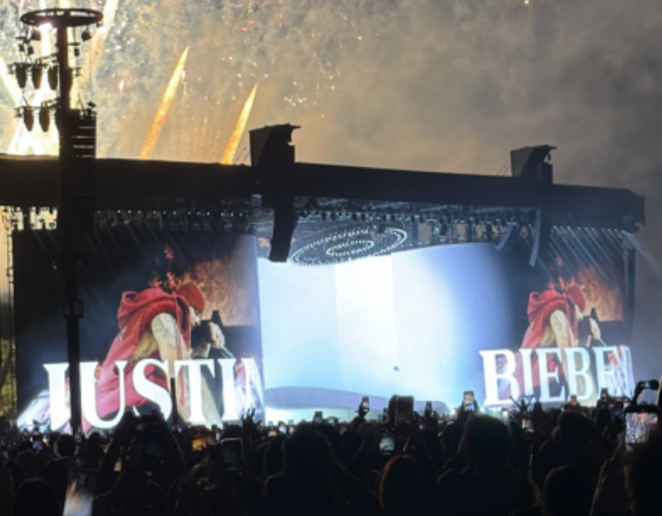


Coachella Valley Music and Arts Festival is a two-weekend music festival held each April in the desert near Palm Springs, set among palm trees, amidst dry desert air. Each year, it features three headlining artists along with a wide range of additional performances. This year, in 2026, the festival featured artists such as Justin Bieber, Swae Lee, Disclosure, Young Thug, and so many others who reached their peak fame in the 2010’s–but why?
Beginning in this past January a new trend has emerged on the internet: “Is 2026 the new 2016?” From Starbucks’s Unicorn Frappuccinos to pink and purple selfie filters, it’s undeniable that trends from 2016 are making a comeback. It becomes even clearer from the headliners at Coachella 2026 that there’s a deliberate effort to evoke a sense of reminiscence from a decade ago.
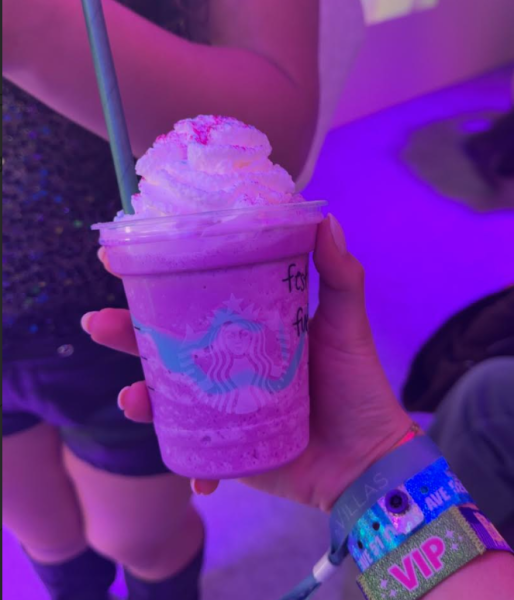
According to People magazine, “The trend is ultimately rooted in nostalgia, and many online are reminiscing on 2016 as a ‘simpler’ time.” A simpler time can be defined as a period that feels more carefree, even if that feeling is partly shaped by memory rather than reality. In the case of 2016, many people, especially those who were younger at the time, associate it with early social media culture, viral internet moments, and a pre-pandemic world that seemed less complicated. Platforms like Instagram and Snapchat were dominated by lighthearted trends rather than the highly curated or politically charged content that often fills feeds today.
This sense of simplicity is powerful, and explains why events like Coachella lean into artists who defined that era. Musicians such as Justin Bieber or Young Thug don’t just bring their music, but they bring back memories of a specific cultural moment. Hearing their songs live can transport audiences to a time when those tracks first dominated playlists, radio stations, and parties. Many fans are experiencing a resurgence of “Bieber Fever”… and in all fairness, who can resist??
At the same time, this revival says as much about the present as it does about the past. Traditionally, according to Vice Magazine, trends have a cycle pattern of about every 20 years. However, with the expansion of fast-fashion and micro-trends, trend cycle patterns have accelerated to a reappearance rate of anywhere between five to ten years.
Chief merchandising officer of Bergdorf Goodman Yumi Shin expanded on the re-emergance of trends in an interview with Vogue Business Magazine, “We always say that trends emerge in threes. When we see an idea at least three times, we know it will make it into our trend forecast, whether it’s a major or micro-trend.”
So what could those three things be in the case of Coachella? Music, digital aesthetics, and consumer products. It translates into hiring artists to headline who defined the sound of 2016, decade old trends resurfacing on Instagram and Snapchat, and the return of items and aesthetics that tap into the 2016 iconography. Younger festival-goers who may have been children in 2016 are now experiencing these aesthetics and sounds for the first time, while older attendees are reliving them.
Yet, it’s worth questioning whether 2016 was truly “simpler,” or if it only feels that way in hindsight. Nostalgia often smooths over the complexities of the past, turning it into an idealized version of itself. According to Medium, people are most hooked to Social Media when they are engaged in controversy and conflict, vulnerability of victims, novelty of the outrageous, and emotional extremes. Social media has evolved from a primarily social, friend-focused experience in 2016 to an algorithm-driven, everything platform today.
What Coachella 2026 ultimately reflects is not just a longing for a specific year, but a broader desire for familiarity and comfort in an increasingly fast-paced and uncertain world.

